
The Role of Technology in Modernising Nigeria’s Civil Service for 21st Century Governance Demands
June 20, 2026How AI Tools Are Helping Nigerian Regulatory Agencies Process Applications and Enforce Compliance Faster
June 21, 2026Why Health System Strengthening Matters
The strength of a nation’s health system is one of the most important determinants of its social and economic development. A well-functioning health system improves life expectancy, reduces poverty, strengthens workforce productivity, and builds resilience against public health emergencies.
In Nigeria, however, persistent weaknesses across multiple components of the health system continue to limit access to quality healthcare for millions of citizens. These challenges affect everything from workforce availability and infrastructure quality to financing mechanisms and governance effectiveness.
Addressing these weaknesses requires strategic investment in the areas that will produce the greatest long-term impact.
The Most Urgent Weaknesses in Nigeria’s Health System
Nigeria‘s health system challenges are extensive and cut across every level of care.
Among the most pressing concerns are:
- Insufficient numbers of trained health workers
- Unequal distribution of healthcare personnel between urban and rural areas
- Poorly equipped and under-resourced health facilities
- Inadequate operational funding for frontline services
- Weak health information systems
- Governance and accountability challenges
While all of these issues require attention, some investments offer significantly greater system-wide returns than others.
At the centre of these priorities is the health workforce.
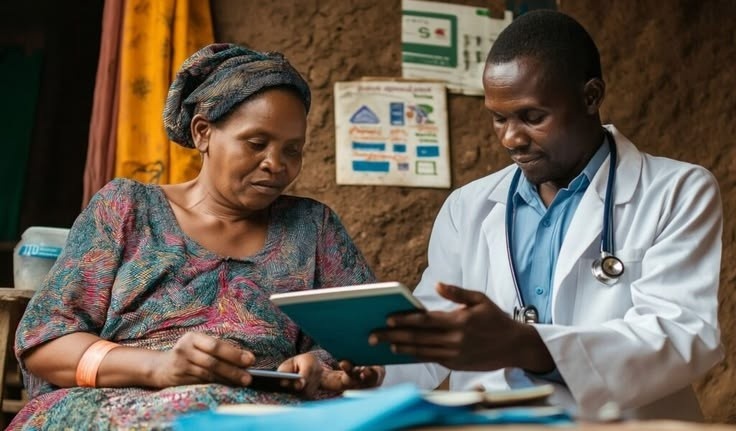
Investing in the Health Workforce: The Highest Priority
No health system can perform better than the people who deliver its services.
Doctors, nurses, midwives, pharmacists, laboratory professionals, and community health workers form the foundation upon which every healthcare intervention depends. Yet Nigeria continues to face significant shortages of health personnel relative to international benchmarks.
The problem extends beyond numbers alone.
Many rural and underserved communities struggle to attract and retain qualified health workers, creating substantial disparities in healthcare access between urban and rural populations.
For this reason, the most important health system strengthening investment available to federal and state governments is workforce development.
This includes:
- Expanding medical and nursing school capacity
- Strengthening community health worker training programmes
- Improving continuing professional education
- Enhancing remuneration and working conditions
- Creating incentives for rural deployment and retention
Building a stronger health workforce is a long-term commitment, but it remains the single most important investment for improving healthcare outcomes nationwide.
Rebuilding Primary Healthcare Infrastructure
Primary healthcare facilities represent the first point of contact between citizens and the formal health system.
These facilities are responsible for delivering essential services including immunisation, maternal healthcare, child health services, disease prevention, and basic treatment for common illnesses.
Yet many primary healthcare centres across Nigeria face serious infrastructure deficits.
Common challenges include:
- Unreliable electricity supply
- Lack of clean water
- Shortages of essential medicines
- Non-functional equipment
- Inadequate staffing levels
- Poor building conditions
When primary healthcare facilities are unable to provide basic services, patients are forced either to travel long distances for care or to delay treatment altogether.
Investment in rehabilitation, equipment, maintenance, and operational support for primary healthcare centres therefore offers some of the highest returns in health system performance.
Strengthening frontline care reduces pressure on secondary and tertiary facilities while improving health outcomes at the community level.
Strengthening Governance and Leadership
Financial resources and infrastructure alone cannot guarantee effective healthcare delivery.
Strong governance is the mechanism that ensures resources are used efficiently, services are delivered equitably, and institutions remain accountable for performance.
Weak governance often manifests through:
- Poor resource allocation
- Limited accountability mechanisms
- Ineffective supervision systems
- Weak implementation of health policies
- Political interference in technical decision-making
Strengthening governance requires investment in institutional capacity at federal, state, and local levels.
This includes improving the technical capabilities of ministries of health, strengthening performance monitoring systems, and developing leadership programmes that prepare healthcare managers to oversee increasingly complex health systems.
Effective governance enables every other investment to produce better results.
Why Health Investment Is Also an Economic Investment
Healthcare spending is often viewed primarily as a social expenditure. In reality, it is also one of the most productive economic investments a country can make.
The economic costs of weak health systems are substantial.
Poor health reduces workforce productivity, increases absenteeism, lowers educational attainment, and contributes to premature mortality. Families facing catastrophic healthcare expenses frequently fall deeper into poverty, while preventable illnesses reduce national economic output.
Nigeria also experiences significant losses through health worker migration, as many highly trained professionals leave the country in search of better opportunities abroad.
These losses represent a direct drain on the country’s investment in medical education and workforce development.
Conversely, healthier populations contribute more effectively to economic growth, innovation, and national development.
Building the Case for Sustained Health Investment
Global health economics research consistently demonstrates that investments in health generate returns that exceed their costs when broader economic benefits are considered.
Improved population health leads to:
- Higher labour productivity
- Greater educational achievement
- Reduced poverty levels
- Lower healthcare costs over time
- Stronger economic resilience
For this reason, health sector funding should be viewed not as consumption spending but as a strategic investment in national development.
Federal and state governments that prioritize health system strengthening are investing not only in better healthcare outcomes but also in long-term economic growth and social stability.
Looking Ahead
Nigeria’s path toward universal access to quality healthcare depends on making strategic investments in the foundations of the health system.
A stronger health workforce, functional primary healthcare infrastructure, effective governance systems, and sustained financing represent the pillars upon which lasting health system transformation must be built.
While progress will require significant resources and long-term commitment, the benefits extend far beyond the health sector itself. Stronger health systems create healthier communities, more productive economies, and more resilient societies.
The question is not whether Nigeria can afford to invest in health system strengthening. The evidence increasingly suggests that Nigeria cannot afford not to.
