Practical Policy Recommendations for Developing Nigeria’s Digital Economy to Its Full Potential
July 1, 2026How AI-Assisted Policy Analysis Tools Are Helping Nigerian Government Teams Make Faster and Better Decisions
July 2, 2026Why Election Technology Matters for Nigerian Democracy
Elections are the moment when the abstract idea of popular sovereignty becomes a concrete count of real ballots, and the integrity of that count determines whether citizens accept the resulting government as legitimate.
Election technology Nigeria adopts is, at its core, an effort to make that count more accurate, more verifiable, and more resistant to manipulation than the manual processes it replaces.
When voters trust that their ballot is recorded and counted as cast, they invest in the democratic system; when they suspect manipulation, that trust—and with it political stability—erodes.
Nigeria’s electoral history includes well-documented abuses that technology directly targets: multiple voting, impersonation, ballot-box stuffing, and the alteration of results during transmission and collation.
Election technology Nigeria has introduced—biometric registration and accreditation, electronic results transmission—attacks precisely these vulnerabilities.
The promise is an electoral process where the points most susceptible to human manipulation are constrained by systems that create verifiable, tamper-evident records.
The Technologies Nigeria Has Deployed
Nigeria’s electoral commission has progressively built a technological stack around the voter register and the voting process.
Biometric voter registration created a database tied to fingerprints and facial data, aimed at eliminating the duplicate and fictitious registrations that once inflated voter rolls.
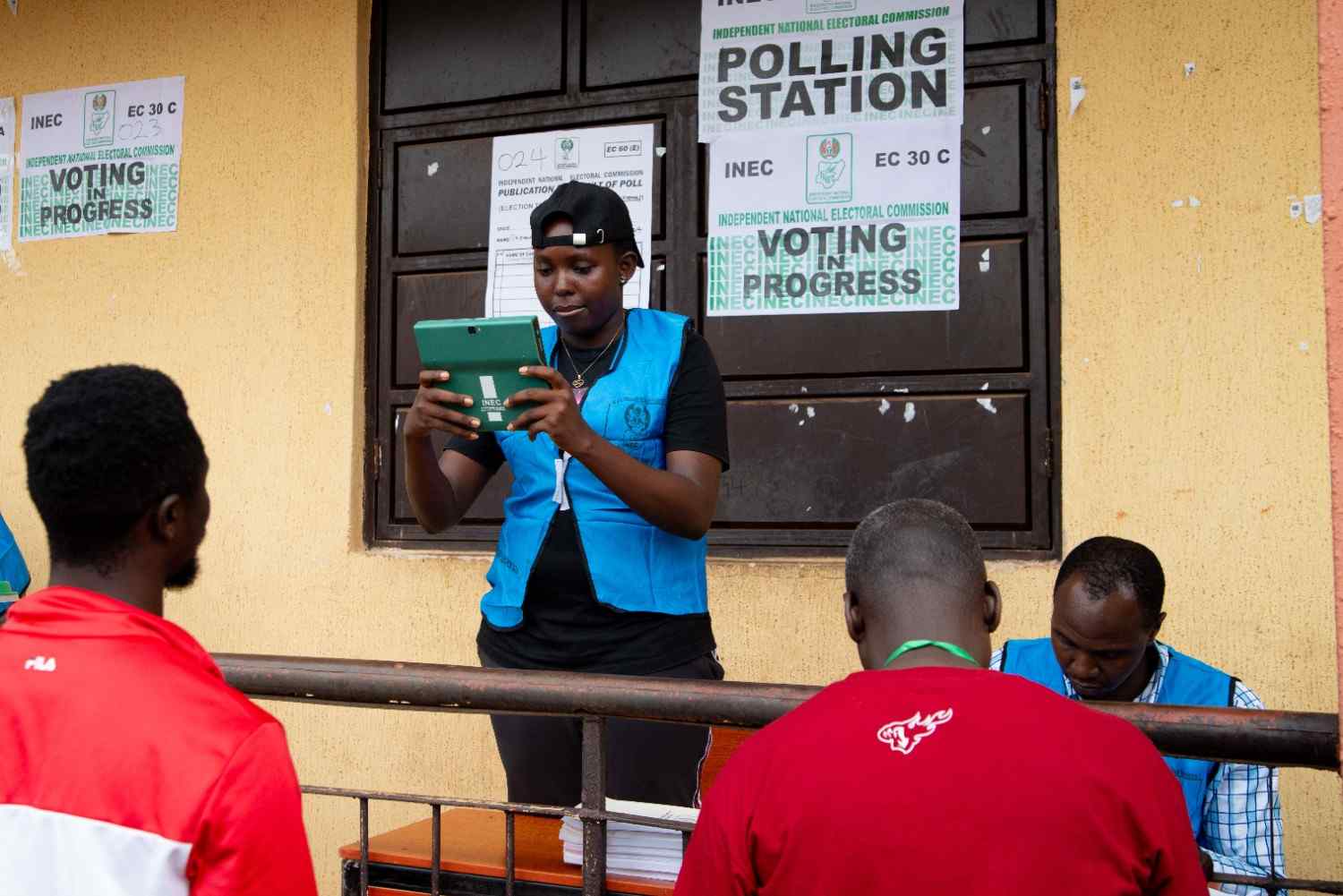
The Bimodal Voter Accreditation System then linked that database to the polling unit, requiring biometric verification before a voter could be accredited and thereby attacking impersonation and multiple voting at the point of casting.
The most consequential and contested addition has been electronic transmission of results.
By capturing polling-unit results and uploading them to a public portal, election technology Nigeria deployed aimed to create an independent, real-time record against which collated figures could be checked, closing the gap during which results were historically most vulnerable to alteration.
The integrity of this transmission layer has become the central technical and legal battleground of recent Nigerian elections.
What the Technology Has and Has Not Solved
The honest assessment is that election technology Nigeria has deployed has solved some problems decisively while leaving others untouched or even creating new ones.
Biometric accreditation has substantially reduced impersonation and multiple voting at the polling unit, which is a real and important gain.
A cleaner voter register and a verifiable accreditation record represent genuine structural improvements over the wholly manual systems of earlier decades.
Yet technology cannot by itself solve problems rooted in human conduct and institutional weakness.
Vote-buying, voter intimidation, logistical failures that disenfranchise voters, and disputes over the reliability and timeliness of results transmission persist.
Where systems fail or underperform on election day, the resulting confusion can actually deepen mistrust, because citizens were promised a technological guarantee that did not fully materialise.
Election technology Nigeria relies on must therefore be matched by operational excellence and legal clarity to deliver its promised benefits.
Building Trust and Transparency Into Election Systems
Public trust in election technology depends less on the sophistication of the systems than on their transparency and verifiability.
Election technology Nigeria uses should be auditable by independent observers, its source code and procedures open to scrutiny by accredited experts, and its results reconcilable through processes that ordinary citizens and party agents can understand and check.
Technology operated as a black box, however advanced, invites the suspicion that undermines its entire purpose.
Clear legal frameworks are the indispensable partner of technical systems.
The law must specify unambiguously what role each technology plays, what happens when a system fails, and how electronic and physical records are reconciled in disputes.
Much of the controversy surrounding recent Nigerian elections has turned on legal ambiguity about whether and how electronically transmitted results are binding, demonstrating that election technology Nigeria adopts succeeds only when the surrounding rules are as well-engineered as the systems themselves.
The Future of Election Technology in Nigeria
The trajectory of election technology Nigeria will follow should be one of consolidation and trust-building rather than perpetual novelty.
Rather than introducing new systems under the intense pressure of each election cycle, the electoral commission would be better served by stabilising, stress-testing, and independently auditing the systems already in place, so that voters and parties develop confidence in tools whose behaviour is predictable and verified well before polling day.
Investment in resilience, training, and contingency planning will determine whether future deployments build or erode trust.
Election technology Nigeria depends on must work reliably in polling units without electricity or network coverage, be operated by adequately trained officials, and have robust manual fallbacks when systems fail.
The goal is not a flawless digital utopia but a credibly managed system in which technology constrains fraud, citizens understand how their votes are protected, and the inevitable imperfections are handled transparently rather than concealed.