
The Problem SINNTS Was Built to Solve
June 19, 2026Practical Data Governance Principles That Nigerian Government Agencies Should Adopt Immediately
June 19, 2026The Current Limitations of Legislative Oversight in Nigeria
Nigerian legislative oversight is constrained by several factors that digital tools can partially but not completely address.
Information asymmetry — the significant advantage that executive branch agencies have over legislatures in terms of access to programme data, financial information, and technical expertise — limits the quality of legislative scrutiny. Legislators who do not have access to the same information quality that executive agencies hold cannot interrogate budget implementation, programme performance, or policy compliance effectively.
Capacity constraints — the limited analytical and technical staff available to support legislative oversight — mean that committee hearings are frequently less rigorous than their constitutional mandate requires.
And political incentives — the party discipline, constituency pressures, and executive-legislative relationship dynamics that affect legislators’ willingness to pursue inconvenient oversight findings — cannot be changed by technology but significantly shape the legislative appetite for effective oversight.
Digital Information Systems for Nigerian Legislative Oversight
Digital information systems that provide legislators and their staff with access to the same programmatic and financial data that executive agencies use would fundamentally change the information asymmetry that constrains Nigerian legislative oversight.
Budget execution dashboards — providing legislators with real-time access to expenditure data by ministry, programme, and project — would enable committee chairs to identify implementation gaps, question responsible officials based on documented evidence, and monitor follow-up on oversight recommendations with precision that periodic report submission processes cannot provide.
Contractor performance databases — accessible to legislators — would allow oversight committees to review the completion status and quality of government contracts before approving new appropriations to agencies whose previous contract management record is problematic.
IPPIS payroll data access — enabling legislative oversight of civil service workforce management — would provide the employment statistics that committees need to assess ministry staffing adequacy and ghost worker prevalence without depending entirely on executive-supplied information.
Digital Committee Management and Research Capacity in Nigerian Legislatures
Legislative committee effectiveness depends critically on the quality of research and analytical support available to committee chairs and members.
Nigerian legislative committees typically have minimal analytical support — relying on staff who have administrative rather than subject matter expertise, and who lack the digital research tools that effective policy analysis requires.
Building digital research capacity in Nigerian legislative institutions — through investment in research databases, legislative information management systems, and technical staff recruitment — would significantly improve the quality of committee work.
The National Assembly’s Legislative Information Centre and the equivalent facilities in state assemblies provide a foundation that requires investment to fulfil its potential as a genuine analytical resource for oversight committees.
Partnerships with Nigerian university policy research centres — providing analytical support to oversight committees on technical subjects where legislative staff expertise is limited — offer a cost-effective pathway to improved oversight quality.
Transparency Tools for Nigerian Legislative Proceedings
Transparency in Nigerian legislative proceedings — the public accessibility of committee meeting records, vote records, attendance records, and legislative performance information — is both an accountability requirement and a quality improvement driver.
When legislators know that their attendance, their voting records, and their committee participation are publicly documented and accessible to their constituents, the incentives for responsible legislative behaviour are strengthened.
Digital transparency tools for Nigerian legislative institutions include:
- Live and archived video streaming of plenary and committee sessions.
- Searchable online repositories of bills, amendments, committee reports, and official correspondence.
- Public vote recording systems that attribute every legislative vote to individual legislators.
- Attendance tracking systems that enable constituent monitoring of representative engagement.
Several Nigerian state assemblies have made progress on these transparency tools, and the national assembly’s digital reform initiatives have expanded public access to legislative information compared to a decade ago — but significant gaps remain.
International Models for Digital Legislative Oversight Applicable to Nigeria
Several African legislative bodies have developed digital oversight capabilities that Nigerian assemblies can learn from and adapt.
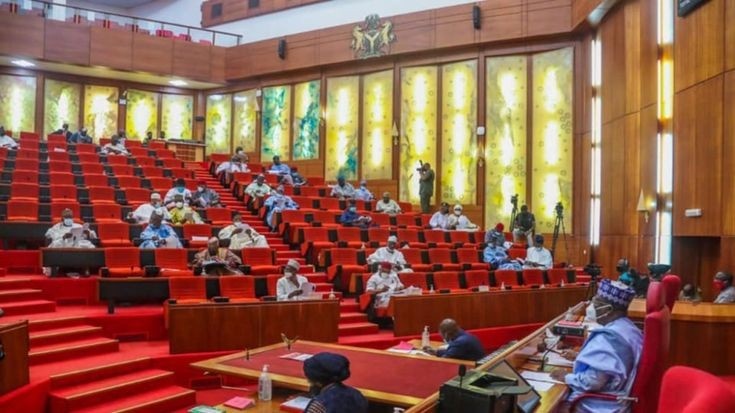
The Kenyan National Assembly’s e-Parliament initiative provides digital tools for bill tracking, committee management, and public participation that have improved oversight quality and citizen engagement.
The South African Parliament’s digital petition and public comment systems enable broader citizen input into legislative processes than the physical participation model allows.
The Ghana Parliament’s legislative tracking system provides public access to the status of all bills under consideration, enabling civil society monitoring of legislative responsiveness.
Nigerian legislative reform advocates who document these international experiences and present them to National Assembly leadership and state assembly speakers — making the case for specific, achievable digital oversight improvements — are more effective than those who make abstract arguments for legislative reform without the concrete examples that decision-makers can evaluate.
The international development community, including USAID, the Westminster Foundation for Democracy, and the National Democratic Institute, has provided support for Nigerian legislative capacity building and is a potential funding partner for digital oversight improvement initiatives.
