Turning Activity Into Value
June 30, 2026Practical Policy Recommendations for Developing Nigeria’s Digital Economy to Its Full Potential
July 1, 2026Why Election Technology Matters for Nigerian Democracy
Democracy depends on the confidence of citizens that their votes are accurately recorded, securely counted, and fairly reflected in election outcomes. Elections transform the principle of popular sovereignty into a measurable expression of the people’s will, making electoral integrity one of the foundations of democratic governance.
In Nigeria, election technology has become an important tool for strengthening this process. By replacing vulnerable manual procedures with digital systems that improve accuracy, transparency, and accountability, technology aims to reduce opportunities for electoral malpractice and increase public trust in election outcomes.
For many years, Nigeria’s elections have faced challenges such as multiple voting, voter impersonation, ballot-box stuffing, and the manipulation of results during collation. Modern election technologies have been introduced specifically to address these weaknesses by creating more secure, verifiable, and transparent electoral processes.
Although technology cannot eliminate every challenge facing elections, it plays a significant role in strengthening the credibility of democratic institutions when properly implemented and supported by effective legal and administrative systems.
The Technologies Nigeria Has Introduced
Nigeria’s electoral system has gradually adopted several technological innovations designed to improve election management from voter registration to result collation.
One of the earliest improvements was biometric voter registration, which created a national voter database linked to each individual’s fingerprints and facial information. This significantly reduced duplicate registrations and helped eliminate fictitious voter records that had previously undermined confidence in the electoral register.
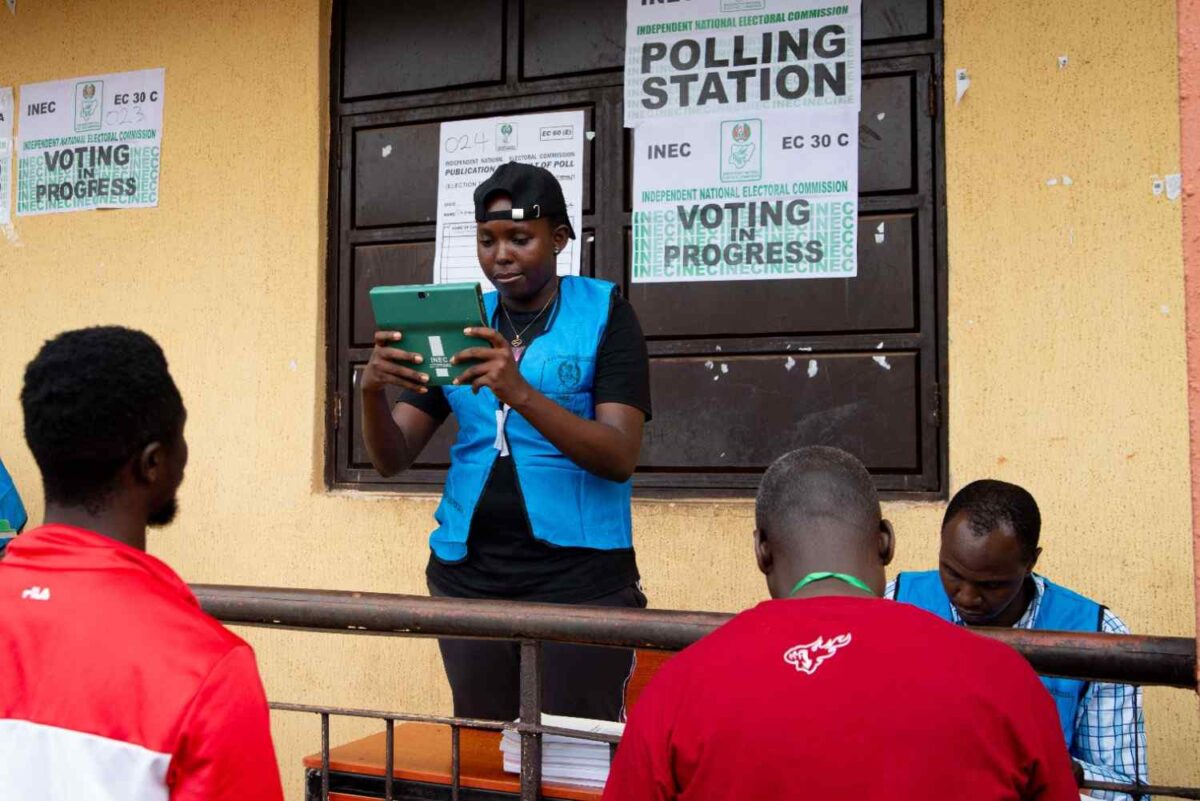
Another major advancement is the Bimodal Voter Accreditation System (BVAS), which verifies voters through fingerprint recognition or facial authentication before accreditation at polling units. This technology has greatly reduced opportunities for voter impersonation and multiple voting by ensuring that each registered voter can only be accredited once.
Nigeria has also introduced electronic transmission of polling-unit results, allowing election officials to upload certified results directly from polling units to an online viewing portal. This system was designed to improve transparency by creating a publicly accessible record that political parties, election observers, journalists, and citizens can compare with officially collated results.
Together, these technologies represent one of the most significant modernisations of Nigeria’s electoral process.
Achievements and Continuing Challenges
Election technology has produced measurable improvements in several aspects of Nigeria’s elections.
Biometric registration has helped create a cleaner voter register, while BVAS has significantly reduced cases of voter impersonation and multiple accreditation. These improvements strengthen confidence that accredited voters are genuine and properly verified before casting their ballots.
However, technology alone cannot solve every electoral challenge.
Problems such as vote-buying, voter intimidation, election-related violence, logistical delays, and inadequate deployment of election materials remain largely dependent on human behaviour, institutional capacity, and effective law enforcement.
Technical difficulties also present challenges. Poor internet connectivity, electricity shortages, equipment malfunctions, or insufficient training of election officials can affect the performance of technological systems. When these issues occur, public expectations may not be met, leading to increased scepticism about the electoral process.
For election technology to deliver its full benefits, reliable implementation must accompany technological innovation.
Building Transparency and Public Trust
Technology strengthens democracy only when citizens understand and trust how it works.
Transparent electoral systems allow political parties, accredited observers, civil society organisations, and independent experts to verify that technological processes operate as intended. Public confidence increases when election procedures are open, understandable, and subject to independent scrutiny.
Strong legal frameworks are equally important.
Electoral laws should clearly define the role of each technological system, explain how electronic and physical records are reconciled, and establish procedures for resolving disputes whenever technical failures occur. Clear legal guidance reduces uncertainty and helps maintain public confidence during closely contested elections.
Ultimately, technology should complement—not replace—transparent institutions, independent oversight, and adherence to the rule of law.
The Future of Election Technology in Nigeria
The future of election technology in Nigeria should focus on improving the reliability and credibility of systems that already exist rather than introducing entirely new technologies before every election cycle.
Regular testing, independent audits, comprehensive staff training, and continuous system improvements can strengthen confidence among voters, political parties, and election observers. Electoral technologies should be thoroughly evaluated well before elections so that any technical weaknesses can be identified and corrected in advance.
Investment in resilient infrastructure is also essential. Election technologies must function effectively in remote communities where electricity supply and internet connectivity may be limited. Well-designed contingency plans and clearly documented manual backup procedures ensure that elections can continue fairly even when technical problems occur.
The long-term objective is not to create a perfect digital election system but to build an electoral process that is transparent, accountable, resilient, and trusted by citizens. When supported by effective institutions, sound legislation, and professional election administration, technology can play an increasingly important role in strengthening democratic governance and protecting the integrity of elections in Nigeria.
Conclusion
Election technology has become an important part of Nigeria’s ongoing efforts to improve electoral integrity and strengthen democratic governance. Innovations such as biometric voter registration, BVAS accreditation, and electronic transmission of results have reduced several longstanding vulnerabilities within the electoral process.
At the same time, technology is only one component of credible elections. Transparent institutions, clear legal frameworks, effective logistics, professional election management, and informed citizens remain essential for ensuring that every vote counts.
As Nigeria continues to refine its electoral systems, sustained investment in reliable technology, independent oversight, and public trust will help build elections that more accurately reflect the will of the people and reinforce confidence in democratic governance.